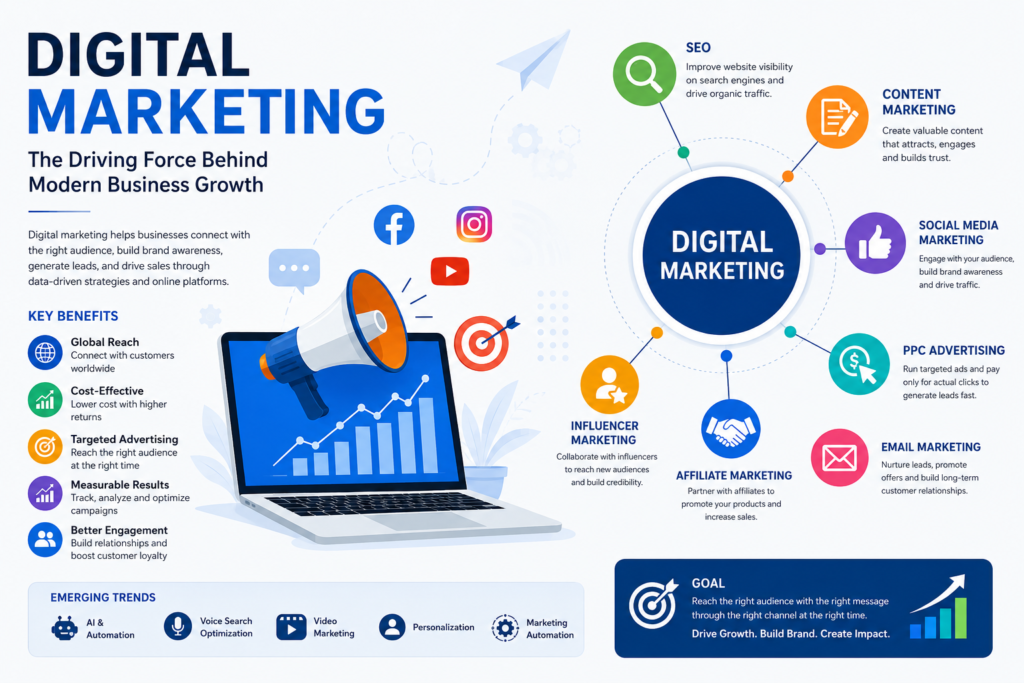
In today’s fast-paced digital world, businesses are constantly looking for innovative ways to connect with their audience, increase brand awareness, and drive sales. Traditional marketing methods such as print advertisements, billboards, and television commercials still hold value, but they are no longer sufficient in a highly connected digital landscape. This is where digital marketing comes into play. Digital marketing has transformed the way businesses communicate with customers, offering targeted, measurable, and cost-effective strategies to achieve growth and success.
What is Digital Marketing?
Digital marketing refers to the promotion of products, services, or brands through digital channels such as search engines, websites, social media platforms, email, and mobile applications. Unlike traditional marketing, digital marketing enables businesses to interact directly with consumers, gather real-time data, and optimize campaigns based on performance.
The primary goal of digital marketing is to reach the right audience at the right time with the right message. By leveraging technology and online platforms, businesses can create personalized experiences that enhance customer engagement and build long-term relationships.
The Importance of Digital Marketing
The internet has become an essential part of daily life. People use search engines to find information, social media to connect with others, and online platforms to shop for products and services. As consumer behavior shifts toward digital channels, businesses must establish a strong online presence to remain competitive.
Digital marketing offers several advantages:
- Global Reach: Businesses can connect with customers worldwide without geographical limitations.
- Cost-Effectiveness: Compared to traditional advertising, digital marketing often delivers better results at a lower cost.
- Measurable Results: Marketers can track campaign performance through analytics tools and make data-driven decisions.
- Targeted Advertising: Businesses can reach specific audiences based on demographics, interests, behavior, and location.
- Improved Customer Engagement: Digital platforms enable direct communication and interaction with customers.
These benefits make digital marketing an essential strategy for organizations of all sizes.
Key Components of Digital Marketing
1. Search Engine Optimization (SEO)
Search Engine Optimization (SEO) is the process of improving a website’s visibility on search engines like Google. When users search for products or services online, businesses that appear on the first page of search results are more likely to attract traffic and generate leads.
SEO involves various techniques, including:
- Keyword research
- On-page optimization
- Technical SEO
- Content creation
- Link building
A strong SEO strategy helps businesses increase organic traffic, enhance credibility, and improve user experience.
2. Content Marketing
Content marketing focuses on creating and distributing valuable, relevant, and consistent content to attract and retain a target audience. Instead of directly promoting products, businesses provide useful information that addresses customer needs and challenges.
Examples of content marketing include:
- Blog posts
- Articles
- Videos
- Infographics
- E-books
- Podcasts
High-quality content establishes authority, builds trust, and encourages customers to engage with a brand.
3. Social Media Marketing
Social media platforms have become powerful marketing tools. Businesses use platforms such as Facebook, Instagram, LinkedIn, X (formerly Twitter), and YouTube to connect with their audience, share content, and promote products or services.
Benefits of social media marketing include:
- Increased brand awareness
- Enhanced customer engagement
- Higher website traffic
- Lead generation
- Community building
Successful social media marketing requires consistent posting, audience interaction, and strategic content planning.
4. Pay-Per-Click (PPC) Advertising
PPC advertising is a model where businesses pay a fee each time someone clicks on their advertisement. Popular PPC platforms include Google Ads and social media advertising networks.
PPC offers several advantages:
- Immediate visibility
- Precise audience targeting
- Flexible budgeting
- Measurable results
Businesses can quickly generate traffic and leads by running well-optimized PPC campaigns.
5. Email Marketing
Email marketing remains one of the most effective digital marketing channels. It involves sending targeted messages to subscribers to nurture relationships, promote products, and encourage conversions.
Common email marketing campaigns include:
- Welcome emails
- Newsletters
- Promotional offers
- Product updates
- Customer retention campaigns
Personalized email communication often results in higher engagement and customer loyalty.
6. Affiliate Marketing
Affiliate marketing is a performance-based strategy where businesses reward affiliates for driving traffic or sales. Affiliates promote products through websites, blogs, social media, or email campaigns and earn commissions for successful referrals.
This approach allows businesses to expand their reach while minimizing marketing risks.
7. Influencer Marketing
Influencer marketing involves collaborating with individuals who have a strong online following and influence over their audience. Influencers can help brands increase visibility, credibility, and engagement by promoting products through authentic recommendations.
As consumers increasingly trust peer recommendations over traditional advertisements, influencer marketing continues to grow in popularity.
The Role of Data in Digital Marketing
One of the greatest strengths of digital marketing is access to data. Businesses can track user behavior, analyze campaign performance, and gain insights into customer preferences.
Key metrics include:
- Website traffic
- Click-through rate (CTR)
- Conversion rate
- Bounce rate
- Customer acquisition cost (CAC)
- Return on investment (ROI)
Data-driven decision-making enables marketers to optimize strategies, improve targeting, and maximize results.
Emerging Trends in Digital Marketing
Digital marketing is constantly evolving. Businesses must stay updated with emerging trends to maintain a competitive advantage.
Artificial Intelligence (AI)
AI is transforming digital marketing by automating tasks, analyzing data, and delivering personalized experiences. AI-powered chatbots, recommendation systems, and predictive analytics help businesses improve efficiency and customer satisfaction.
Voice Search Optimization
With the growing use of voice assistants such as Siri, Alexa, and Google Assistant, voice search optimization has become increasingly important. Businesses must adapt their SEO strategies to accommodate conversational search queries.
Video Marketing
Video content continues to dominate online engagement. Platforms such as YouTube, Instagram Reels, and TikTok have demonstrated the power of short-form and long-form video content in capturing audience attention.
Personalization
Consumers expect personalized experiences. Businesses use customer data to deliver tailored recommendations, targeted advertisements, and customized content that enhances user satisfaction.
Marketing Automation
Automation tools streamline repetitive tasks such as email campaigns, social media scheduling, and lead nurturing. This allows marketers to focus on strategy and creative initiatives while improving operational efficiency.
Challenges in Digital Marketing
Despite its numerous benefits, digital marketing presents certain challenges:
Increasing Competition
As more businesses invest in digital marketing, standing out from competitors becomes more difficult. Brands must focus on delivering unique value and exceptional customer experiences.
Algorithm Changes
Search engines and social media platforms frequently update their algorithms, affecting visibility and engagement. Marketers must continuously adapt their strategies to remain effective.
Privacy Concerns
Consumers are becoming more concerned about data privacy. Businesses must comply with regulations and maintain transparency regarding data collection and usage practices.
Content Saturation
The internet is flooded with content, making it challenging to capture audience attention. Creating high-quality, relevant, and engaging content is essential for success.
Building an Effective Digital Marketing Strategy
A successful digital marketing strategy begins with clear objectives. Businesses should define measurable goals such as increasing website traffic, generating leads, improving brand awareness, or boosting sales.
Key steps include:
- Identify the target audience.
- Conduct market research.
- Choose appropriate digital channels.
- Create valuable content.
- Optimize for search engines.
- Implement paid advertising when necessary.
- Monitor performance metrics.
- Continuously refine strategies based on results.
Consistency, creativity, and data-driven decision-making are critical components of a successful strategy.
Conclusion
Digital marketing has become an indispensable part of modern business operations. It provides organizations with powerful tools to reach their target audience, build meaningful relationships, and drive sustainable growth. Through strategies such as SEO, content marketing, social media marketing, email campaigns, and paid advertising, businesses can enhance their online presence and achieve measurable results.
As technology continues to evolve, digital marketing will become even more sophisticated, offering new opportunities for innovation and customer engagement. Businesses that embrace digital transformation, stay informed about industry trends, and prioritize customer needs will be better positioned to thrive in the competitive digital marketplace. In an era where online interactions influence purchasing decisions more than ever before, digital marketing is not just an option—it is a necessity for long-term success.