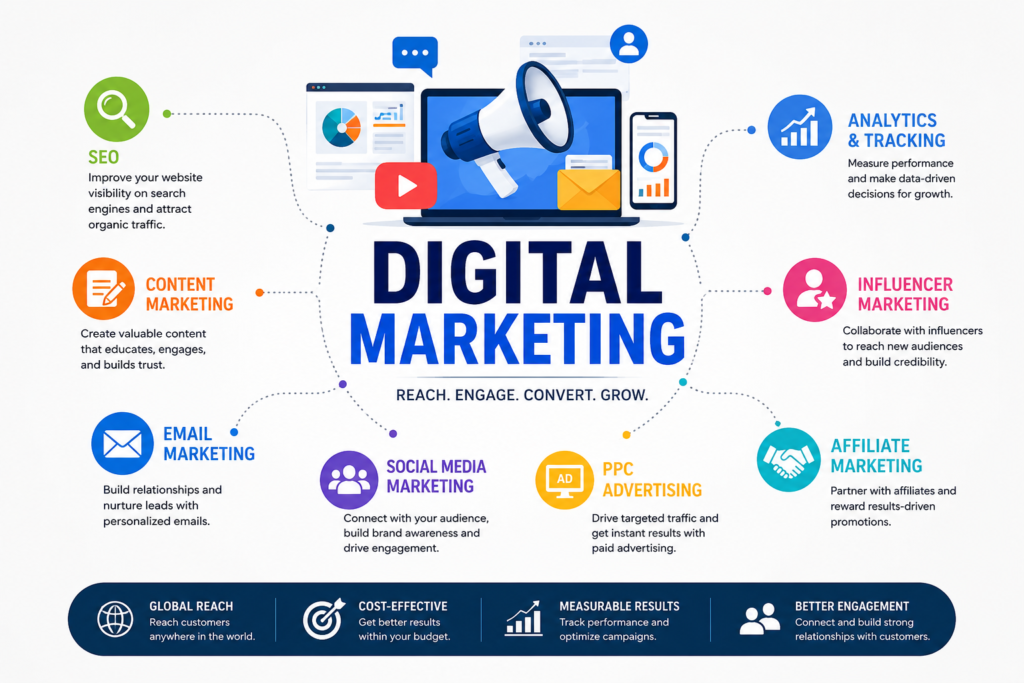
In today’s fast-paced digital world, businesses can no longer rely solely on traditional marketing methods to reach their target audience. Consumers spend a significant portion of their time online—searching for information, shopping, engaging on social media, and consuming digital content. This shift has made digital marketing one of the most powerful tools for businesses of all sizes. Whether you’re a startup, a small business, or a large enterprise, understanding digital marketing is essential for building brand awareness, attracting customers, and driving revenue growth.
What is Digital Marketing?
Digital marketing refers to the promotion of products, services, or brands using digital channels and technologies. These channels include search engines, websites, social media platforms, email, mobile applications, and online advertising networks. Unlike traditional marketing, digital marketing allows businesses to target specific audiences, track performance in real time, and optimize campaigns based on measurable results.
The primary goal of digital marketing is to connect with potential customers where they spend most of their time—online. By leveraging various digital platforms, businesses can create personalized experiences that improve engagement and increase conversions.
Why Digital Marketing Matters
The importance of digital marketing has grown significantly over the past decade. As internet usage continues to rise, consumers increasingly depend on digital platforms to make purchasing decisions. Businesses that fail to establish a strong online presence risk losing valuable opportunities to competitors.
Here are some key benefits of digital marketing:
1. Cost-Effective Marketing
Compared to traditional advertising methods such as television, radio, or print media, digital marketing is often more affordable. Small businesses can run highly targeted campaigns with limited budgets and still achieve impressive results.
2. Global Reach
Digital marketing enables businesses to reach audiences across geographical boundaries. A company operating in one city can attract customers from different regions or even international markets through online channels.
3. Measurable Results
One of the greatest advantages of digital marketing is the ability to track campaign performance. Businesses can monitor website traffic, conversion rates, customer engagement, and return on investment (ROI) using analytics tools.
4. Better Customer Targeting
Digital platforms allow marketers to target audiences based on demographics, interests, behavior, location, and purchasing habits. This precision improves campaign effectiveness and reduces wasted advertising spend.
5. Enhanced Customer Engagement
Through social media, email marketing, and content creation, businesses can interact directly with their audience, build relationships, and foster customer loyalty.
Key Components of Digital Marketing
Digital marketing consists of several interconnected strategies that work together to achieve business objectives. Understanding these components is essential for creating a successful marketing plan.
Search Engine Optimization (SEO)
SEO is the process of optimizing a website to improve its visibility on search engines like Google. When users search for relevant keywords, businesses want their websites to appear at the top of search results.
Effective SEO involves:
- Keyword research
- High-quality content creation
- Technical website optimization
- Mobile-friendly design
- Link building
- Fast page loading speeds
A strong SEO strategy helps generate organic traffic, increase credibility, and reduce dependence on paid advertising.
Content Marketing
Content marketing focuses on creating valuable and relevant content to attract and engage a target audience. Instead of directly promoting products, businesses provide useful information that addresses customer needs and interests.
Examples of content marketing include:
- Blog posts
- Articles
- Videos
- Infographics
- Podcasts
- E-books
- Case studies
Quality content helps establish authority, build trust, and guide potential customers through the buying journey.
Social Media Marketing
Social media platforms have become essential marketing channels for modern businesses. Platforms such as Facebook, Instagram, LinkedIn, Twitter, and TikTok allow brands to connect with audiences, share content, and build communities.
Benefits of social media marketing include:
- Increased brand awareness
- Customer engagement
- Website traffic generation
- Lead generation
- Customer support opportunities
Successful social media marketing requires consistent posting, audience interaction, and a clear content strategy.
Pay-Per-Click (PPC) Advertising
PPC advertising allows businesses to display ads on search engines and other digital platforms. Advertisers pay only when users click on their ads.
Popular PPC channels include:
- Google Ads
- Bing Ads
- Social media advertising
- Display advertising
PPC campaigns can generate immediate traffic and are particularly useful for promoting products, services, and special offers.
Email Marketing
Email marketing remains one of the most effective digital marketing strategies. It enables businesses to communicate directly with customers through personalized messages.
Common email marketing campaigns include:
- Newsletters
- Promotional offers
- Product updates
- Event invitations
- Customer retention campaigns
When executed properly, email marketing delivers high engagement rates and excellent ROI.
Affiliate Marketing
Affiliate marketing involves partnering with individuals or organizations that promote products in exchange for commissions on sales generated through their referrals.
This performance-based approach helps businesses expand their reach while minimizing upfront advertising costs.
Influencer Marketing
Influencer marketing leverages individuals with large and engaged online followings to promote products or services. Influencers can help businesses build credibility, reach niche audiences, and increase brand awareness.
As consumers increasingly trust recommendations from people they follow online, influencer marketing has become a valuable component of many digital strategies.
The Role of Data and Analytics
Data plays a central role in digital marketing success. Unlike traditional marketing methods, digital campaigns generate detailed performance metrics that marketers can analyze and optimize.
Important metrics include:
- Website traffic
- Bounce rate
- Click-through rate (CTR)
- Conversion rate
- Customer acquisition cost (CAC)
- Return on ad spend (ROAS)
- Customer lifetime value (CLV)
By analyzing these metrics, businesses can identify strengths, uncover opportunities, and make informed marketing decisions.
Emerging Trends in Digital Marketing
The digital marketing landscape continues to evolve rapidly. Businesses must stay updated with emerging trends to remain competitive.
Artificial Intelligence (AI)
AI-powered tools are transforming digital marketing by automating tasks, analyzing customer behavior, and delivering personalized experiences. Chatbots, predictive analytics, and content recommendations are just a few examples of AI applications.
Voice Search Optimization
With the growing popularity of voice assistants, businesses must optimize content for voice-based searches. Voice search queries are often conversational and require different SEO strategies than traditional text searches.
Video Marketing
Video content continues to dominate online engagement. Short-form videos, live streams, webinars, and educational content help businesses capture attention and communicate messages effectively.
Personalization
Modern consumers expect personalized experiences. Businesses that tailor content, product recommendations, and communications based on customer preferences often achieve higher engagement and conversion rates.
Marketing Automation
Marketing automation platforms streamline repetitive tasks such as email campaigns, lead nurturing, and customer segmentation. Automation improves efficiency while delivering more consistent customer experiences.
Building an Effective Digital Marketing Strategy
Creating a successful digital marketing strategy requires careful planning and execution. Here are some essential steps:
Define Your Goals
Start by identifying specific objectives, such as:
- Increasing website traffic
- Generating leads
- Boosting sales
- Improving brand awareness
- Enhancing customer retention
Clear goals provide direction and help measure success.
Understand Your Audience
Research your target audience to understand their needs, preferences, behaviors, and pain points. Creating buyer personas can help guide marketing efforts.
Choose the Right Channels
Not every digital channel will be suitable for every business. Select platforms that align with your audience and objectives.
Create Valuable Content
Develop content that educates, informs, entertains, or solves problems for your audience. High-quality content serves as the foundation of successful digital marketing.
Monitor and Optimize
Regularly analyze campaign performance and make adjustments based on data insights. Continuous optimization helps maximize results and improve ROI.
Challenges in Digital Marketing
Despite its advantages, digital marketing presents several challenges:
- Increasing competition
- Frequent algorithm updates
- Changing consumer behavior
- Data privacy regulations
- Content saturation
- Maintaining consistent engagement
Businesses must remain flexible and adapt their strategies to overcome these challenges effectively.
Conclusion
Digital marketing has revolutionized the way businesses connect with customers. By leveraging channels such as SEO, content marketing, social media, email marketing, and paid advertising, organizations can reach targeted audiences, build meaningful relationships, and achieve sustainable growth.
As technology continues to evolve, digital marketing will become even more sophisticated and data-driven. Businesses that invest in understanding their audience, creating valuable content, and embracing innovation will be better positioned to succeed in an increasingly competitive online environment.
Whether you’re just beginning your digital marketing journey or looking to refine your existing strategy, the key lies in staying adaptable, customer-focused, and committed to continuous improvement. With the right approach, digital marketing can become a powerful engine for long-term business success.
FOR MORE ABOUT DM-ABOUThttps://ebinshaju.com/